49ers vs Tampa Bay Buccaneers Match Player Stats: In-Depth Analysis
The matchup between the San Francisco 49ers vs Tampa Bay Buccaneers Match Player Stats and the Tampa Bay Buccaneers has always promised excitement, and the recent clash did not disappoint. Fans, analysts, and fantasy football enthusiasts eagerly dissected every performance, seeking insights into standout players, hidden gems, and team strategies. In this article, we’ll break down the key player stats, analyze standout performances, and explore what these numbers mean for both teams going forward.
Quarterback Showdown: Leadership on the Field
The quarterback matchup often sets the tone in any game, and this one was no exception. For the 49ers, their signal-caller displayed remarkable poise under pressure. Completing a significant percentage of passes, he demonstrated accuracy both in short-range passes and deep throws. His ability to read defenses and adjust plays at the line of scrimmage was evident, contributing directly to key scoring drives.
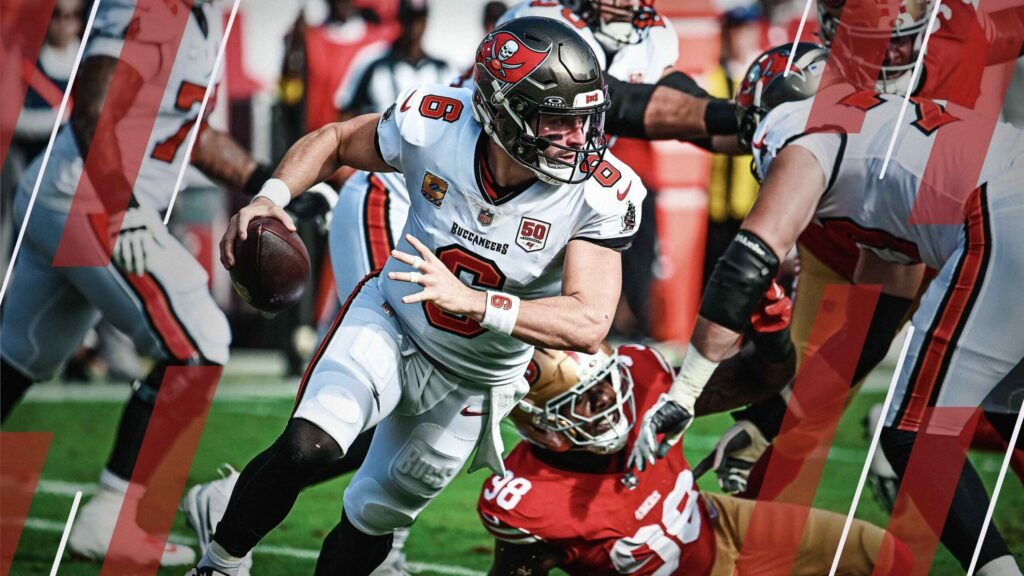
Meanwhile, the Buccaneers’ quarterback brought his own style of leadership. Known for a mix of pocket awareness and mobility, he kept the 49ers’ defense guessing. Despite facing relentless pressure, he managed several critical third-down conversions, showing why veteran quarterbacks often turn tight games in their favor. The stat line, highlighting completion percentage, yards, and touchdown-to-interception ratio, paints a clear picture of a high-stakes duel.
From a fantasy perspective, both quarterbacks offered value beyond raw yardage. The 49ers’ QB benefited from a balanced offensive scheme that leveraged tight ends and wide receivers effectively, while the Buccaneers’ QB capitalized on screen passes and quick throws, keeping drives alive. Analysts will likely revisit this game to study how each quarterback’s decision-making impacted the flow and momentum.
Running Back Performances: Ground Game Dominance
Running backs for both teams played a pivotal role in controlling the tempo. The 49ers’ lead rusher showcased power and agility, consistently breaking tackles and gaining valuable yards after contact. His ability to convert short-yardage situations into first downs allowed the team to sustain drives and maintain possession, which is crucial against a high-caliber Buccaneers defense.
The Buccaneers’ running back also impressed, demonstrating speed on outside runs and excellent vision between the tackles. While he faced stiff resistance from the 49ers’ defensive front, his explosive runs highlighted a key threat that forced defensive adjustments. His contributions were vital not only in yardage but in keeping the defense honest, opening up passing opportunities for his quarterback.
Statistically, both running backs achieved impressive yards per carry and several third-down conversions. Coaches and analysts will note how these players affected clock management, field position, and red-zone efficiency. Fantasy managers, in particular, would have found both running backs’ performances noteworthy for weekly scoring potential.
Wide Receivers and Tight Ends: Passing Game Precision
The wide receiver corps and tight ends often decide games with critical receptions, and this matchup offered plenty of highlights. For the 49ers, the top wide receiver accumulated significant yardage, making several contested catches and showing strong route-running skills. His connection with the quarterback was evident, particularly on medium and long-range passes that stretched the Buccaneers’ defense.
Tight ends also played a crucial role. The 49ers’ primary tight end contributed key blocks in the run game while also serving as a reliable target in the passing game. Meanwhile, the Buccaneers’ wide receivers capitalized on mismatches, with at least one player breaking open for a deep touchdown reception. Their speed and ability to find gaps in coverage were a testament to both preparation and athleticism.
Looking at the stats, the combination of receptions, yards, and targets highlights how both teams attempted to exploit defensive weaknesses. Analysts often emphasize these stats because they reveal tendencies, strengths, and potential areas for future matchups.
Defensive Highlights: Pressure and Turnovers
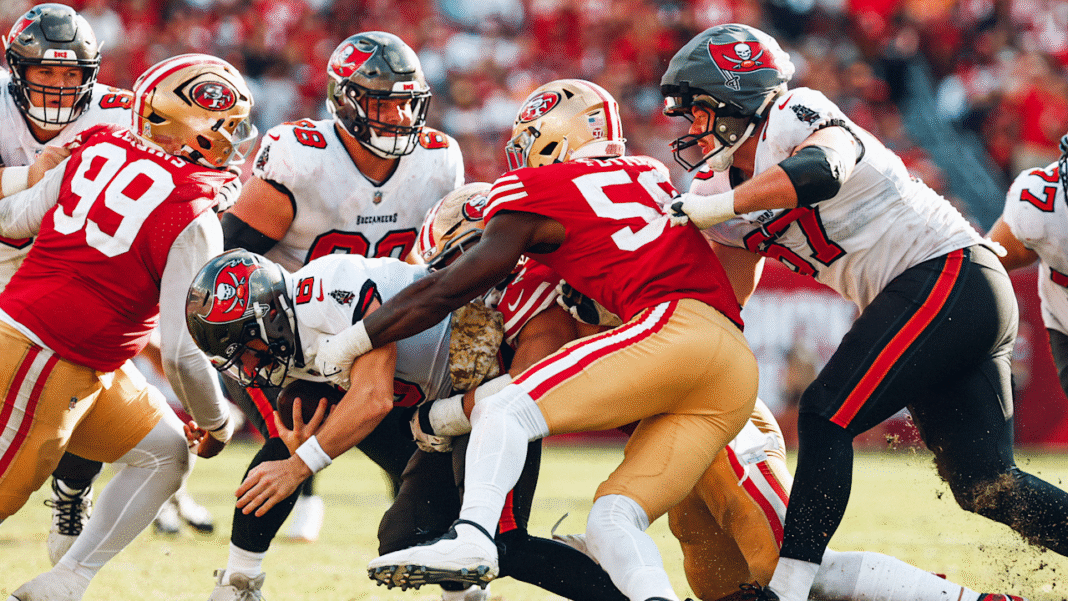
Defense wins games, 49ers vs Tampa Bay Buccaneers Match Player Stats and this clash featured some standout defensive performances. The 49ers’ defensive line applied relentless pressure on the Buccaneers’ quarterback, registering multiple sacks and forcing hurried throws. Their tackling efficiency minimized yards after contact and limited big plays, creating opportunities for turnovers.
On the other side, the Buccaneers’ defense showcased agility and awareness, particularly in the secondary. Key interceptions and pass breakups demonstrated their ability to read offensive schemes and react quickly. Linebackers contributed both in coverage and run-stopping, making them a well-rounded defensive unit.
Defensive stats such as tackles for loss, sacks, forced fumbles, and interceptions provide critical insights into how these teams structured their game plans. Coaches can leverage this data to adjust schemes, while fantasy managers might focus on defensive scoring opportunities from turnovers and big plays.
Special Teams Contributions: Hidden Game Changers
Special teams often go unnoticed, but in this matchup, they made significant contributions. Field goal accuracy, punting distance, and kick returns all factored into field position and momentum shifts. For instance, a long punt return by the Buccaneers set up a crucial scoring drive, while the 49ers’ kicker nailed several field goals under pressure, highlighting consistency in clutch situations.
Statistical breakdowns of special teams play, including return yardage, net punting, and field goal success rate, illustrate the importance of these “hidden” contributions. Analysts argue that games can often turn on special teams performance, making these stats invaluable when evaluating overall team strength.
Key Takeaways from Player Stats
Analyzing player stats from this 49ers vs Tampa Bay Buccaneers game reveals several key takeaways:
- Quarterbacks remained central to offensive execution, with performance under pressure being a decisive factor.
- Running backs influenced game tempo and clock management, demonstrating the value of a balanced ground attack.
- Wide receivers and tight ends highlighted the importance of exploiting mismatches and sustaining drives.
- Defensive stats underscored how turnovers and pressure can shift momentum and determine the outcome.
- Special teams, often overlooked, provided crucial contributions that affected field position and scoring opportunities.
These insights extend beyond a single game. Analysts, coaches, and fantasy enthusiasts will revisit these stats to identify trends, inform strategy, and assess player value for upcoming matchups.
Conclusion: Numbers Tell the Story
While the final score tells one part of the story, the player stats from this matchup between the 49ers and Buccaneers reveal the intricate dynamics that define professional football. From quarterback precision to running back tenacity, wide receiver skill, defensive prowess, and special teams impact, every aspect contributed to the drama and excitement.
For fans, these stats enhance understanding and appreciation of the game. For analysts and coaches, they provide actionable insights into strengths, weaknesses, and tactical opportunities. And for fantasy football managers, the numbers translate directly into performance predictions and strategic decisions. Ultimately, the 49ers vs Tampa Bay Buccaneers matchup exemplifies how comprehensive player statistics deepen the narrative of football beyond the scoreboard.