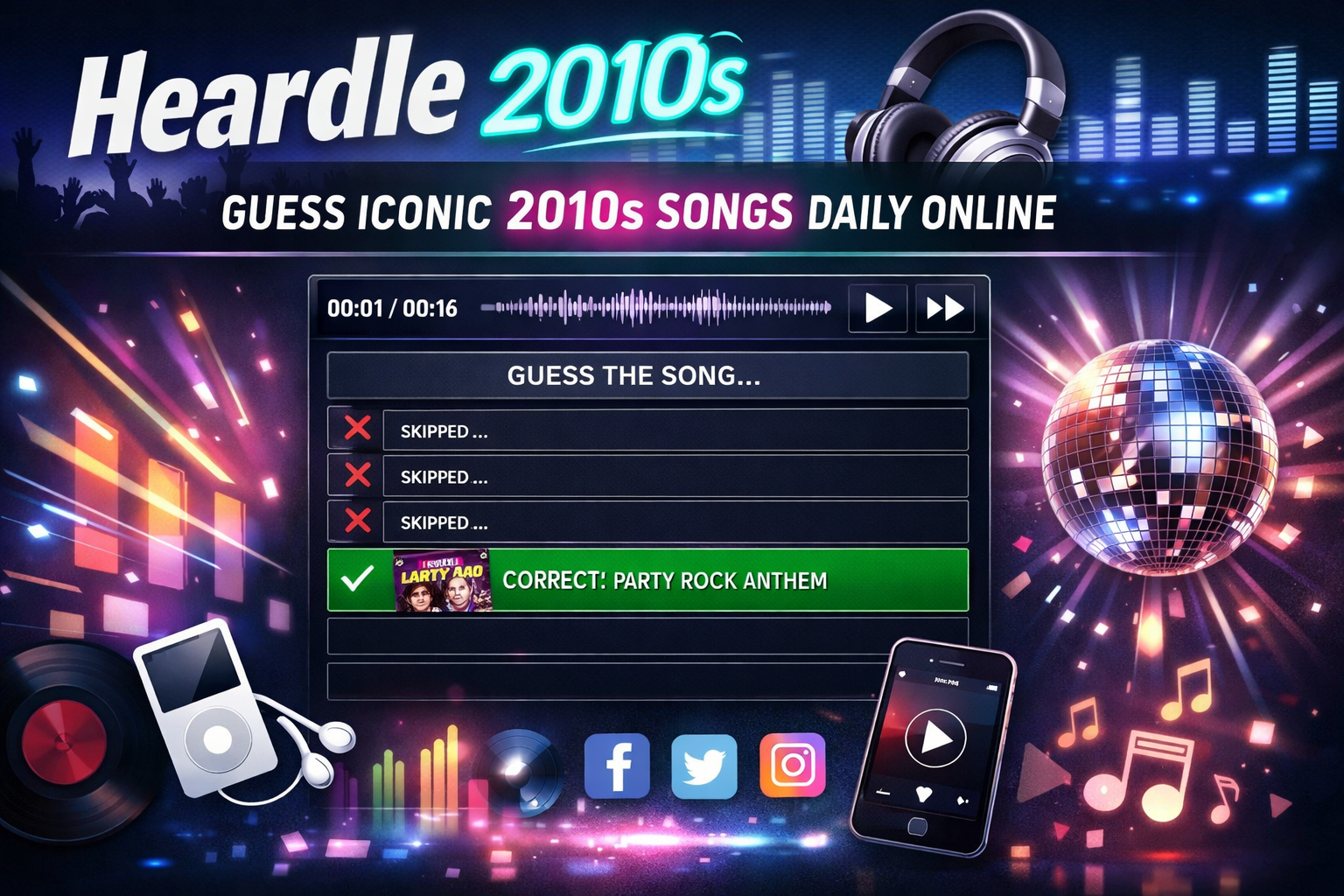
Heardle 2010s Game: Guess Iconic 2010s Songs Daily Online
If you grew up in the 2010s or just love that decade’s music, there’s a game that makes you feel instantly nostalgic: Heardle 2010s. It’s like a musical time machine for your ears. Every day, players get a short snippet of a song from the 2010s and have to guess which track it is. At first, it sounds simple, but it’s trickier than you might think—especially when the song starts with a soft intro or unusual beat. I remember the first time I tried it; I immediately recognized a few notes, but it took a couple of guesses to pin down the correct song. And honestly, that little “aha!” moment when you finally get it is oddly satisfying.
What Is Heardle 2010s?
At its core, Heardle 2010s is a daily music guessing game. The concept is straightforward: you listen to the opening of a song, type your guess, and check if it’s correct. Each day, a new song is featured, keeping players coming back for the challenge. The game only gives six attempts, which adds pressure—especially when the song starts with a subtle instrumental.
Unlike some music trivia games that rely on multiple-choice answers, Heardle feels more personal. You aren’t picking from options; you’re relying on your memory and music instincts. That’s why it’s addictive. One day, it could be a mainstream pop hit; another day, a lesser-known indie track that makes you dig through Spotify playlists just to confirm.
Why Heardle 2010s Became So Popular
I think the appeal of Heardle 2010s is simple but powerful: nostalgia. Music from our past has a way of triggering memories. When I hear the opening of a 2010 hit, I’m not just thinking about the song; I remember where I was when it played, the friends I was with, and even the tiny details like what I was wearing.
Another reason it’s popular is accessibility. You don’t need a paid subscription, special downloads, or hours of time. Five minutes is enough to play a round, guess a song, and maybe brag a little if you get it right on the first try. Social sharing is also a huge factor. Players love showing off their streaks or talking about which songs stumped them.
Finally, the decade itself has a kind of musical diversity that lends itself perfectly to a game like this. The 2010s had everything: electronic dance anthems, indie folk, rap, R&B, and the resurgence of classic pop sounds. It keeps the guessing interesting and prevents the game from ever feeling stale.
How to Play Heardle 2010s: Step by Step
Playing is easy, but mastering it takes some practice. Here’s how I approach each round:
- Listen Carefully – The game starts with a very short snippet, often only a second or two. Pay attention to the melody, instruments, or even the beat. Sometimes, the tiniest detail gives it away.
- Type Your Guess – As soon as you think you know the song, start typing. The game will auto-suggest titles, which is helpful if you’re unsure of the exact spelling.
- Check Feedback – Heardle uses color coding to indicate correctness: a green mark means you got it right, yellow usually hints you got the artist right but the song wrong.
- Use Hints Wisely – You get six attempts per song. Each incorrect guess unlocks a slightly longer snippet, giving you more clues. My strategy is to guess early if I’m confident but to wait for a longer snippet if I’m unsure.
- Share Your Results – The fun part is sharing your daily score. It’s almost like a badge of honor when you guess a tricky song correctly in just a couple of tries.
Personally, I’ve found that pacing yourself and keeping calm is key. Some mornings, I’ll get a song immediately, and other days I’ll fail all six guesses. It’s part of the thrill.
Tips to Improve Your Heardle 2010s Skills
After playing for months, I’ve noticed some strategies that help:
- Know the Decade’s Hits – Familiarity with popular songs from 2010–2019 gives you an edge. Creating playlists of top-charting songs helps a lot.
- Focus on Signature Sounds – Some artists have recognizable opening notes, vocal styles, or instruments. For instance, certain synth patterns scream early 2010s pop.
- Practice Daily – The more you play, the better you get at recognizing patterns. It’s surprising how quickly your ear adapts.
- Watch the Beat and Tempo – Some songs might sound similar if you only focus on the melody. Recognizing tempo and rhythm can narrow down possibilities.
- Keep a Notes List – I sometimes jot down songs I struggle with. Reviewing them before the next round makes future guesses easier.
I remember a day I almost gave up on a song by The Weeknd. The opening was subtle, almost haunting. After listening to the final snippet, it clicked, and I felt a mix of relief and excitement. Moments like that make Heardle addictive.
Heardle 2010s and Nostalgia Culture
It’s fascinating how games like Heardle 2010s tap into nostalgia culture. People aren’t just playing a game—they’re reliving memories. Social media is full of posts like “I totally forgot this song existed!” or “This takes me back to 2013 summer road trips.”
For younger players, it’s educational. They might hear a song their older siblings loved and discover a genre or artist they never explored. For older players, it’s a reminder of what the music scene was like. The decade had some major moments, from viral sensations to quiet indie gems, and Heardle captures that variety beautifully.
Comparing Heardle 2010s to Other Decades
Heardle isn’t limited to the 2010s. There are versions for the 70s, 80s, 90s, and even the 2000s. But the 2010s version has a unique charm:
- Diverse Genres – The decade wasn’t dominated by one genre. You could have a hip-hop hit, followed by indie pop, then an EDM anthem.
- Memorable Pop Culture Moments – Music from this decade is tied closely to social media trends, movie soundtracks, and viral videos.
- Fresh Enough to Be Recognizable – Older decades may confuse younger players. The 2010s is recent enough that most people remember at least the big hits.
From my experience, each decade has its challenges, but the 2010s version often sparks the strongest emotional reactions.
Common Misconceptions About Heardle 2010s
A few misunderstandings about the game are worth addressing:
- It’s Not Just for Experts – You don’t need perfect pitch or extensive music knowledge. Even casual listeners can enjoy it.
- You Can Replay Daily – Each day offers a new song, so there’s always a fresh challenge.
- It’s Not Competitive by Default – While people love sharing scores, you’re really playing against yourself and your memory.
- It’s Free to Play – No subscriptions or premium accounts are required.
- You Can Learn While Playing – You’ll likely discover songs you forgot or never knew. Personally, I’ve added dozens of songs to my playlists thanks to Heardle.
Real-Life Examples From Players
I’ve talked to friends who swear by their Heardle streaks. One friend, Sarah, plays every morning with her coffee. She admits she’s terrible at guessing first but enjoys the little memory exercise. Another friend, Mike, competes with his younger cousin over WhatsApp, trying to guess songs in fewer attempts.
Then there’s me—I usually play while commuting. I find it’s the perfect 5–10 minute mental break. Some days I nail it immediately, other days I feel frustrated, but that’s part of the fun. Hearing the intro to a song you haven’t thought about in years triggers a wave of memories—sometimes even emotional ones.
Heardle 2010s: The Social Element
One of the subtle charms of the game is its social aspect. Players love sharing results on social media, creating mini challenges among friends, or debating which songs should have been featured. Some communities even have discussions around tricky intros, rare tracks, and hidden gems.
Personally, I’ve found these discussions fascinating. They often remind me that even though a song might have been a chart-topper, the opening snippet might not be instantly recognizable. It’s a humbling but fun experience.
Why You Should Try Heardle 2010s
If you’ve never tried it, give it a shot. It’s casual enough to play during a coffee break, but it also offers moments of nostalgia, challenge, and fun. The combination of music memory, daily puzzles, and social interaction makes it unique.
Heardle isn’t just a game—it’s a small daily ritual for many. Some people check it first thing in the morning; others make it part of their evening wind-down. Either way, it’s an easy way to connect with music from a decade that shaped pop culture in big ways.
FAQs About Heardle 2010s
1. Is Heardle 2010s free to play?
Yes! Anyone can play online without paying. You only need a device and an internet connection.
2. Can I play Heardle 2010s more than once per day?
Each daily song is unique, but you can replay past songs through archives available on some sites.
3. Do I need to know every 2010s song to play?
Not at all. Casual listeners often guess songs correctly just from a few notes.
4. Can I share my results with friends?
Absolutely. The game encourages sharing streaks and scores on social media platforms.
5. Are the songs updated regularly?
Yes, every day features a new 2010s song, keeping the challenge fresh and engaging.
Conclusion
Heardle 2010s is more than just a game. It’s a way to revisit the decade that brought us some of the most diverse and memorable music in recent history. Whether you’re a hardcore music fan or just someone who enjoys a daily challenge, Heardle offers a few minutes of fun, nostalgia, and occasional frustration in the best way possible. So, next time you hear a short musical intro, see if you can guess it—you might be surprised how quickly your memory takes you back.
Read Also